Kyiv Polytechnic representatives join LERU webinar on AI, research grants
On 26 June 2026, the International Collaboration Department staff and member of the National Contact Point of Horizon Europe for Cluster 5 “Climate, Energy and Mobility” at the Igor Sikorsky Kyiv Polytechnic Institute joined the webinar organised by the League of European Research Universities (LERU), an association of leading European research-intensive universities that share the values of high-quality teaching within an environment of internationally competitive research.
On 26 June 2026, the International Collaboration Department staff and member of the National Contact Point of Horizon Europe for Cluster 5 “Climate, Energy and Mobility” at the Igor Sikorsky Kyiv Polytechnic Institute joined the webinar organised by the League of European Research Universities (LERU), an association of leading European research-intensive universities that share the values of high-quality teaching within an environment of internationally competitive research.
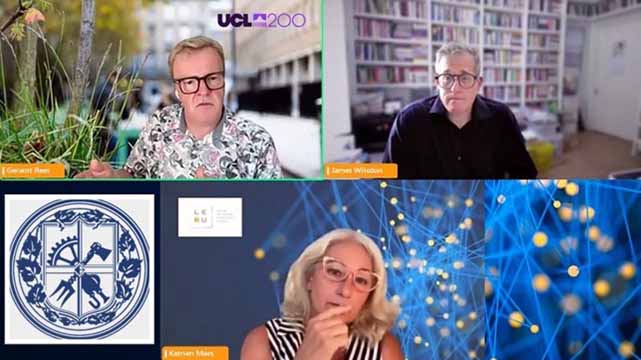
Held under the theme “LERU Talks – AI and research grants: is the system doomed to collapse?”, this event served as a discussion forum connecting the worlds of universities and science policymakers, and bringing this interaction to a wide audience. More than a thousand participants registered for this webinar, showing how timely and important this discussion was.
Increasingly advanced AI models are profoundly changing how researchers develop research grant proposals and how reviewers assess them.
Two experts of University College London, namely Geraint Rees, Professor of Cognitive Neurology and Vice-Provost for Research, Innovation and Global Engagement, and James Wilsdon, Professor of Research Policy and Executive Director of the Research on Research Institute (RoRI), engaged on questions such as:
- What kinds of challenges are arising from these developments?
- Is the grant-funding system due for a complete overhaul?
- How are universities and funders dealing with these challenges?
According to Geraint Rees, AI is seen as something that is running through everything people do, like electricity. Regarding grant applications, he thinks the obvious way to reduce AI usage is to reduce reliance on asynchronous text-based approaches. “What AI can do for researchers is to help them identify potential collaborators, potential teams they might not have thought of,” he said.
From his viewpoint, the underlying problem is that there is not a reliable way to detect whether an LLM or a person has written text.
James Wilsdon remarked that he would use an AI agent to facilitate the application process and help to develop a meaningful proposal.
Looking ahead, Geraint Rees believes future agentic AI models will augment grant office services, extending their reach and capability, rather than replacing them. However, humans with expertise, empathy and agency will always be required in research universities.
He also alluded to the fact there are academic disciplines for which AI literally has close to zero use as the output is subpar, and any potential future use predicates on promise that machines would get better. During the discussion, one of the attendees at this virtual event commented that the side effect might be a further marginalisation of Humanities and Social Science disciplines vis-à-vis other, more AI-attuned disciplines. Geraint Rees responded that an alternate perspective would be that Humanities and Social Sciences may become “more important” topics as STEM knowledge is commoditised by LLMs.
Special thanks are due to Dr Katrien Maes, LERU Engagement Ambassador / EDI and sustainability specialist, for moderating the discussion.
Webinar recording:
https://www.youtube.com/watch?v=cystmTp_Hx0
https://www.leru.org/calendar/leru-talks-ai-and-research-grants-is-the-system-doomed-to-collapse