AI, rankings, next generation metrics: CESAER Task Force meets in TU Wien
The second in-person meeting of the Task Force Institutional Analytics of the CESAER association (Conference of European Schools for Advanced Engineering Education and Research) took place in Vienna on 1–2 June 2026, kindly hosted by Technische Universität Wien (TU Wien).
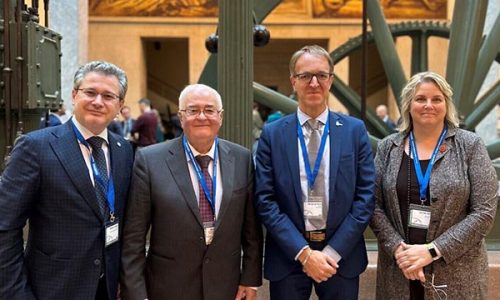
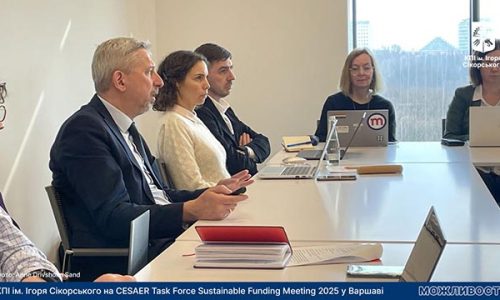
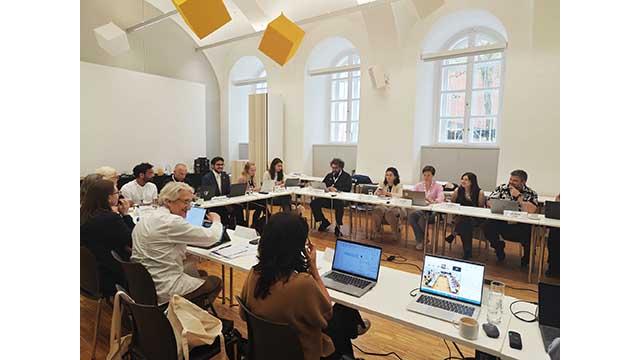
The meeting brought together colleagues from leading universities of science and technology across Europe, including a representative of the International Collaboration Department and the National Contact Point (NCP) of Horizon Europe for Cluster 5 “Climate, Energy and Mobility” at the Igor Sikorsky Kyiv Polytechnic Institute, for exchange on key developments in institutional analytics, including rankings, AI, alliances, and next-generation metrics. On 2 June, the programme featured a dedicated workshop on Next Generation Metrics 2.0.
Peter Ertl, Vice-Rector for Research, Innovation and International Affairs at TU Wien and Co-Chair of the CESAER Workgroup Dual-use, Defence and Space, welcomed participants and provided brief opening reflections.
Peter Elspass, Head of the President’s Staff Department of University Development & Controlling at Leibniz University Hannover and Chair of CESAER Task Force Institutional Analytics, provided an update on the ongoing work. Touko Närhi, Advisor for Benchmark & Higher Education at CESAER, presented the draft position paper on performance assessment of alliances’ work, pending a Board decision. In particular, its proposed principles included added value before output with a focus on what alliances enable that individual universities, bilateral partnerships or short-term projects could not achieve alone. Another proposal called for connecting project-level reporting and monitoring from the outset, building on evidence generated through Erasmus+, FP10, the European Competitiveness Fund, the European Institute of Innovation & Technology, relevant national and regional partnership plans, institutional reporting, and EHESO tools.
Wesley Siqueira, QS Product and Research Advisor, gave a presentation on the QS World University Rankings: Sustainability framework and methodology, focusing on current approaches as well as the role and use of AI. His presentation was followed by open discussions with members of the Task Force about data sources, the design of metrics, and challenges in measuring universities’ sustainability performance, among others.
During the sixth item on the agenda, “AI in institutional research,” Allan Hanbury, Emanuel Sallinger, and Elisabeth Ackerler of TU Wien gave a presentation themed ‘From static observation to dynamic development: a new approach to shaping a future- and skills-oriented research landscape’.
The session then continued with a contribution from Stephan Zimmermann, ETH Zurich, who shared insights into the use of AI-based approaches to connect and analyse different institutional and research-related data sources — moving from static observation to dynamic insights. Addressing major challenges for the graph in the ETH database, he acknowledged that not all courses had a detailed description of their contents, and not all publications contained abstracts. Alexander Nebel, École polytechnique fédérale de Lausanne (EPFL), provided additional examples from the EPFL approach. The session also featured impressive visualisations that brought the data to life.
Jelena Brankovic, Co-Chair of the CoARA Working Group TURN (Thinking Critically about University Rankings Network), gave an online presentation on working group’s activities, and its engagement with rankings. She underlined that today rankings often miss what matters most, particularly community engagement, local impact, and the civic mission of universities.
The Next Generation Metrics 2.0 workshop opened the discussion on a possible update of CESAER’s 2020 white paper Next Generation Metrics. The aim was not to review the full report in detail, but to use it as a starting point for identifying what remains relevant, what has changed since 2020, and what kind of follow-up work would be most useful for CESAER members.
Participants briefly revisited the main logic of the 2020 report before moving into a scoping discussion on the possible direction, scope and level of ambition of a Next Generation Metrics 2.0 workstream. The discussion helped to identify where CESAER members see the greatest need for updated thinking, better interpretation of metrics, practical guidance or policy messages. “Much has changed since then — in the landscape of AI, alliances, and performance assessment — and there is appetite among members for updated thinking and practical guidance,” Johan Blaus, Senior Advisor on Collaboration and Partnerships at KTH Royal Institute of Technology in Stockholm and Co-Chair of the Task Force, wrote on LinkedIn.
It was announced that CESAER Annual Meetings (CAM) 2026 would take place from 21 to 23 October 2026 in Lisbon, Portugal, hosted by Técnico Lisboa.
A huge shout-out to TU Wien (Peter Ertl, Christina Kroneder, Karoline Rasl, Elisabeth Schludermann, Silvia Klettner and Sabine Neff-Kolassa) on the warm hospitality — including a memorable, yummy evening at Heuriger Kierlinger in the Viennese hills.